A.I. and the Fourth Revolution: Opportunity or Redundancy?
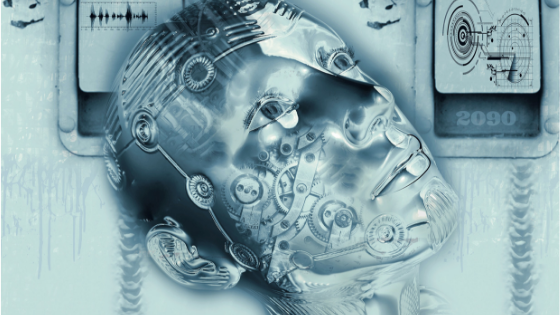
In June this year Oxford University was given £150m by an American billionaire to investigate the ethical implications of A.I. (Artificial Intelligence). Stephen Schwarzman, co-founder of Blackstone, a private equity group, told BBC Radio 4’s Today programme it is his belief that A.I. will constitute the “fourth revolution” for humanity. “I think the scientists agree that they want A.I. introduced in an ethical way, because they don’t want to experience the downsides.” He said he wanted to help people “remember what being human is” amid what will be the “unstoppable” rise of robots.
We are on the cusp of the fourth revolution. There has been considerable hype about how this will be the death knell for the workplace as we know it. However, there is a growing tribe of thinkers who believe the rise of the robots will be great for workers.
Last year I went to a talk by James Whittaker, Distinguished Engineer and Technical Evangelist at Microsoft, leading the way on engineering A.I. His talk lasted about an hour, but its message has stayed with me. James questioned if, through letting machines take the brunt of the data processing, we will be able to ‘live our lives, stop looking at screens and find our humanity again?’ He talked about ‘skills that will be forced into extinction’; complex tasks which will be done faster and more efficiently by A.I. As the internet of things grows, there is just too much data out there for the human brain to be able to search, without A.I. assistance. But James Whittaker also stressed the growing need for human creativity. Artificial Intelligence is not imaginative. Spontaneous ideas and the desire to think creatively to enhance and adapt the world around us will always be the realm of the human brain.
So, whilst the robots are coming, they may give us the space and time to think more creatively and therefore be reminded of our core humanity. Just as in today’s workplace, it will be important to play to the strengths of each ‘brain’, be that a human brain or an artificial brain. How managers go about doing that is a conversation for another day.
Oh, and listen to a James Whittaker talk if you can. You can find him on YouTube. He’s not for the faint hearted (as you can tell by the challenge to ‘Do Epic Shit’ on his t-shirt), but his message blew my mind.
Written by VA Consultant Rachel Woodward.
Back to the Knowledge Hub